
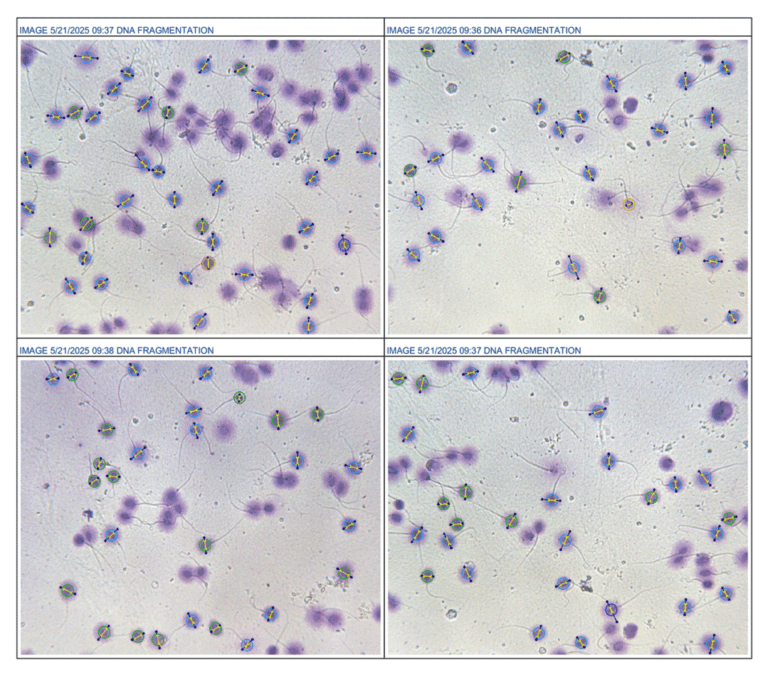
When evaluating male fertility, traditional semen analysis focuses on sperm count, motility, and morphology. While these parameters are important, they do not assess the integrity of sperm DNA. The DNA Fragmentation Index (DFI) measures the percentage of sperm with damaged genetic material, and research shows that higher levels of DNA fragmentation are associated with reduced fertility potential and reproductive challenges.
What DFI Tells Us That Standard Semen Analysis Doesn’t
The DFI provides insight into sperm DNA integrity, which is essential for successful fertilization and embryo development. Sperm with high DNA fragmentation may fertilize an egg but still lead to poor embryo quality or failed pregnancy. Studies have shown that sperm DNA fragmentation correlates with decreased fertility and may predict reproductive outcomes better than conventional semen parameters alone.
How the SCD Test Works
One of the most widely used methods to measure DFI is the Sperm Chromatin Dispersion (SCD) test. In this assay, sperm are treated so that intact DNA forms a visible halo of dispersed chromatin when observed under a microscope, while fragmented DNA shows reduced or absent halos. By analyzing a sample of hundreds of sperm cells, laboratories estimate the percentage of DNA-damaged sperm, the DFI. This method is relatively fast, practical in a clinical setting, and has been validated against other fragmentation assays, making it suitable for routine sperm functional testing.
Clinical Importance of Measuring DFI
A growing body of evidence links elevated DNA fragmentation with poorer reproductive outcomes. High DFI is associated with reduced natural pregnancy rates, impaired embryo development, and higher risk of miscarriage in some clinical settings. Factors such as oxidative stress, age, smoking, or genital tract inflammation can increase DNA fragmentation, making DFI a useful marker of cumulative sperm damage. Many clinicians use DFI testing as an adjunct when traditional semen analysis fails to explain infertility or when couples experience recurrent pregnancy loss or failed assisted reproductive technology cycles.
Why SCD-Based DFI Adds Value
The key advantage of including SCD-based DFI testing in fertility evaluation is its ability to reveal genetic damage that conventional semen analysis misses. By identifying the proportion of sperm with compromised DNA, clinicians can provide more informed counseling, tailor treatment strategies, and consider targeted interventions such as lifestyle modification, antioxidant therapy, or alternative assisted reproductive techniques.
References
Agarwal A, et al. Male Infertility and Sperm DNA Fragmentation. Reproductive Biology and Endocrinology. 2016.
Esteves SC. Sperm DNA Fragmentation Testing: Summary Evidence. Translational Andrology and Urology. 2020.
Conti D, et al. Sperm DNA Fragmentation in Male Infertility. Journal of Reproductive Medicine. 2024.
Balasuriya A, et al. Validation of the Sperm Chromatin Dispersion Test. Fertility and Sterility. 2011.
Practice Guidelines for Sperm DNA Fragmentation Testing. Translational Andrology and Urology. 2021.